
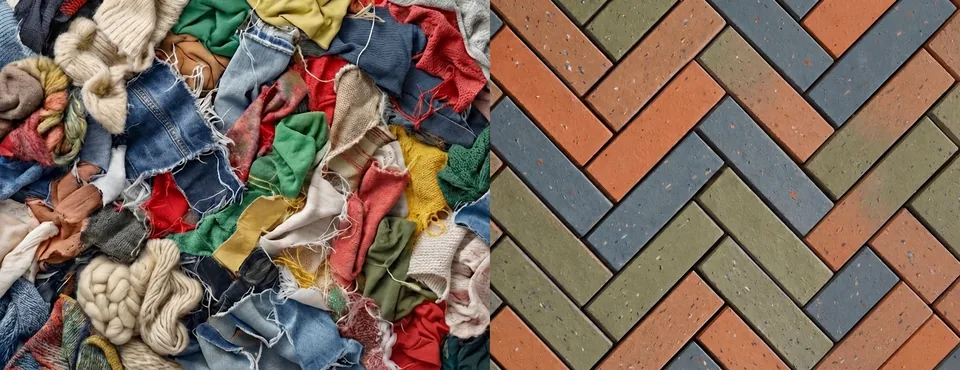
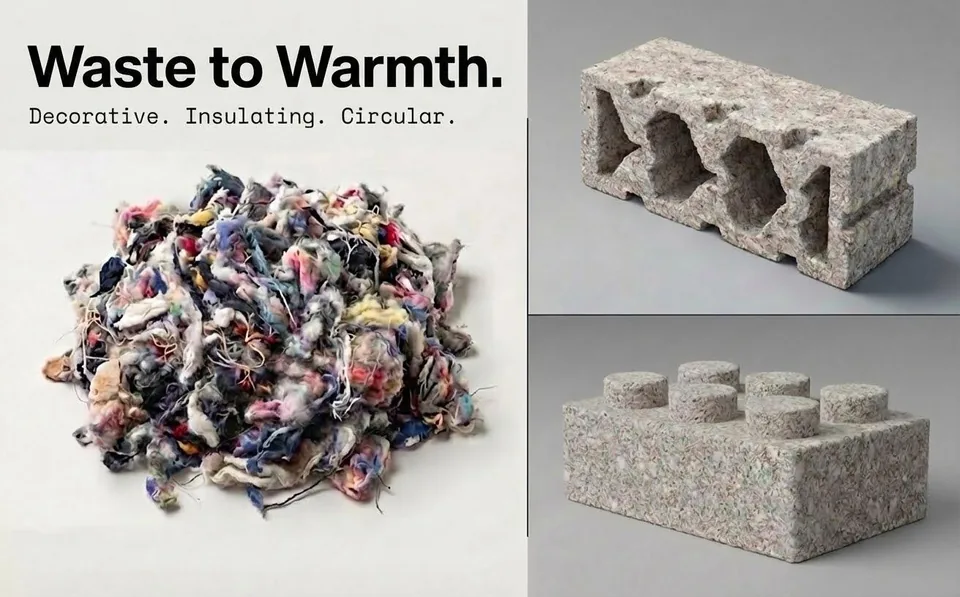
Waste to Warmth. Decorative. Insulating. Circular.
The Problem
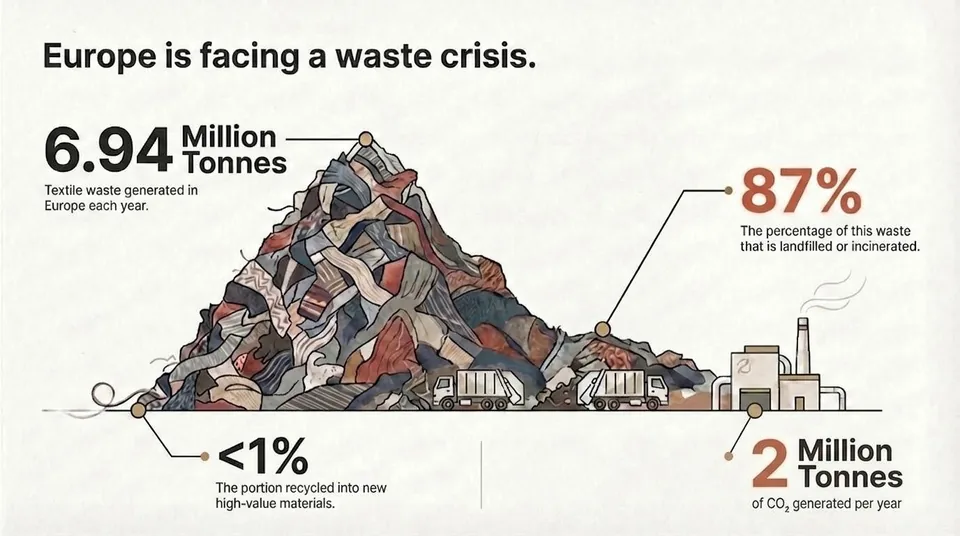
Europe generates millions of tonnes of textile waste every year. Most of it is landfilled or incinerated, while only a small share is recycled into new materials of comparable value. Mixed textile waste is particularly challenging to recover, leaving a valuable resource unused.
Rebrick explores how discarded textiles can become decorative, insulating materials for interiors, connecting the textile waste challenge with a circular product concept.
The Solution
Rebrick is developing a concept for decorative, insulating interior modules made from mixed textile waste. The proposed process shreds textiles into fibers, combines them with a bio-binder, presses them into shape and uses air drying instead of a kiln.
Interlocking shapes are designed for flexible interior applications. Target spaces include cafés, hotels and coworking spaces, as well as universities, museums and libraries. The ambition is to turn discarded textiles into useful materials through a circular B2B product concept.
Milestones
Rebrick connects materials science, engineering and business in a circular product concept. Want to support its next development steps or learn more? Get in touch with us.

Team Lead
Lisa Fischer

Team Lead
Juliana Cromme
29 January 2026
Rebrick won the InnoLab Finals with a circular concept for decorative, insulating interior modules made from mixed textile waste. Shredded textile fibers are combined with a bio-binder, pressed into interlocking shapes and air-dried without a kiln. The concept aims to create flexible, reusable materials for commercial and public spaces.